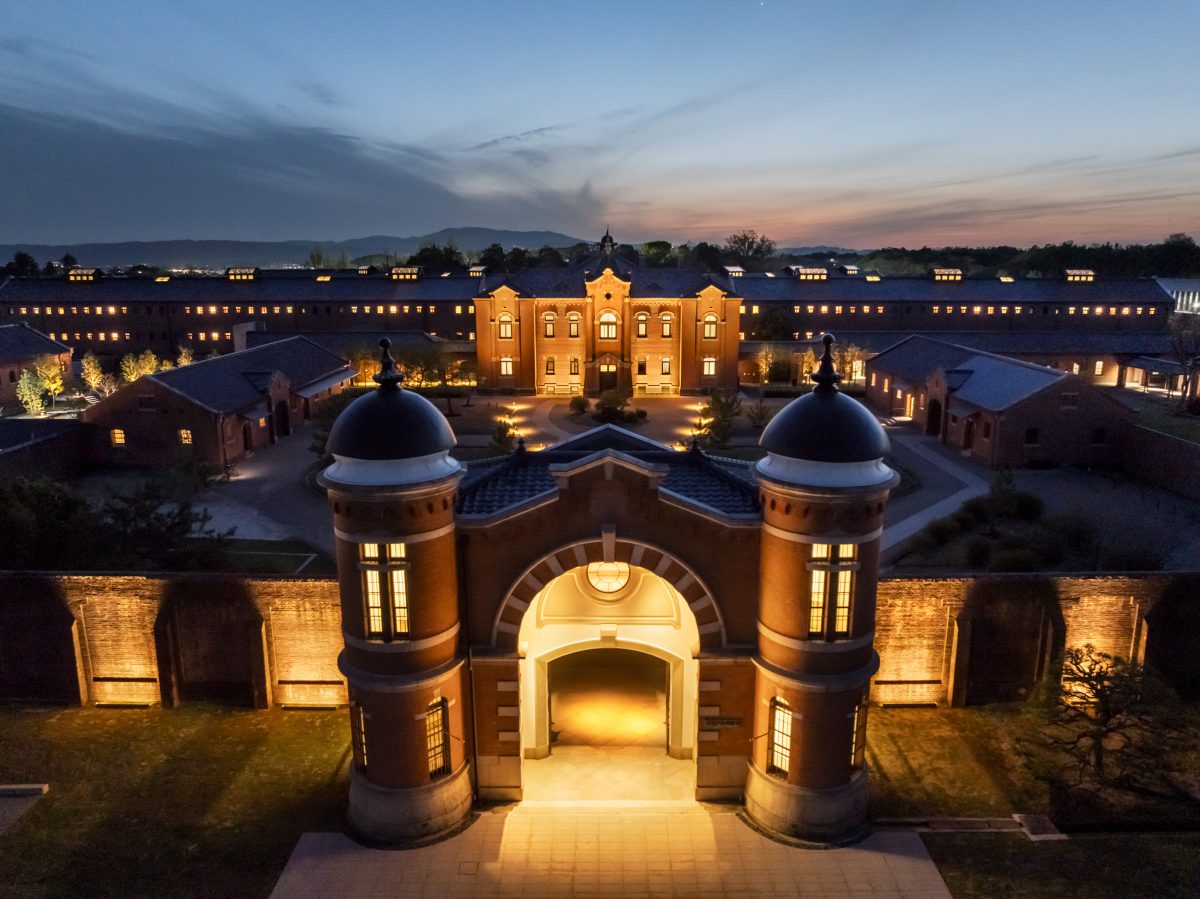
The first thing to understand about HOSHINOYA Nara Prison is that the walls were not built to make anyone feel at ease. They were designed to separate, observe and contain. Today, those same walls frame a hotel promising a rare kind of quiet. The contradiction is not a footnote to the project. It is the project.
Opened on 25 June 2026, the 48-suite property occupies the former Nara Prison, a red-brick complex completed in 1908. Its architect, Keijiro Yamashita, was working in a Japan intent on defining itself as a modern state. The prison's plan was organised around a central guardhouse, with wings extending outward in a radial arrangement. The architecture was meant to make order visible.
It is also unusually beautiful. Brick arches, high windows and careful masonry give the building a formal dignity that outlived its original function. In 1946 it became Nara Juvenile Prison; decades later, the complex was designated an Important Cultural Property. Its architectural significance made demolition an especially poor answer to the question of what should happen next.
The art of not starting again
There is a particular confidence in architecture that chooses not to erase its predecessor. New buildings can establish their own rules. Adaptive reuse must negotiate with rules already written in stone, timber and brick.
The hotel design, led by Rie Azuma and the Azuma Environment and Architecture Institute, works through contrast. Original hand-laid brickwork has been revealed beneath plaster. Historic iron doors, arches and corridors remain as traces of the site's earlier purpose. New timber surfaces and softer materials create a sense of warmth without disguising the old building completely.
That decision is more interesting than a conventional luxury makeover. Rather than flattening the building into a sequence of anonymous suites, the design allows its former divisions to remain perceptible. Former cells have been joined to create generous rooms, yet the underlying rhythm of the prison can still be read. Guests are offered comfort, but not a completely blank slate.
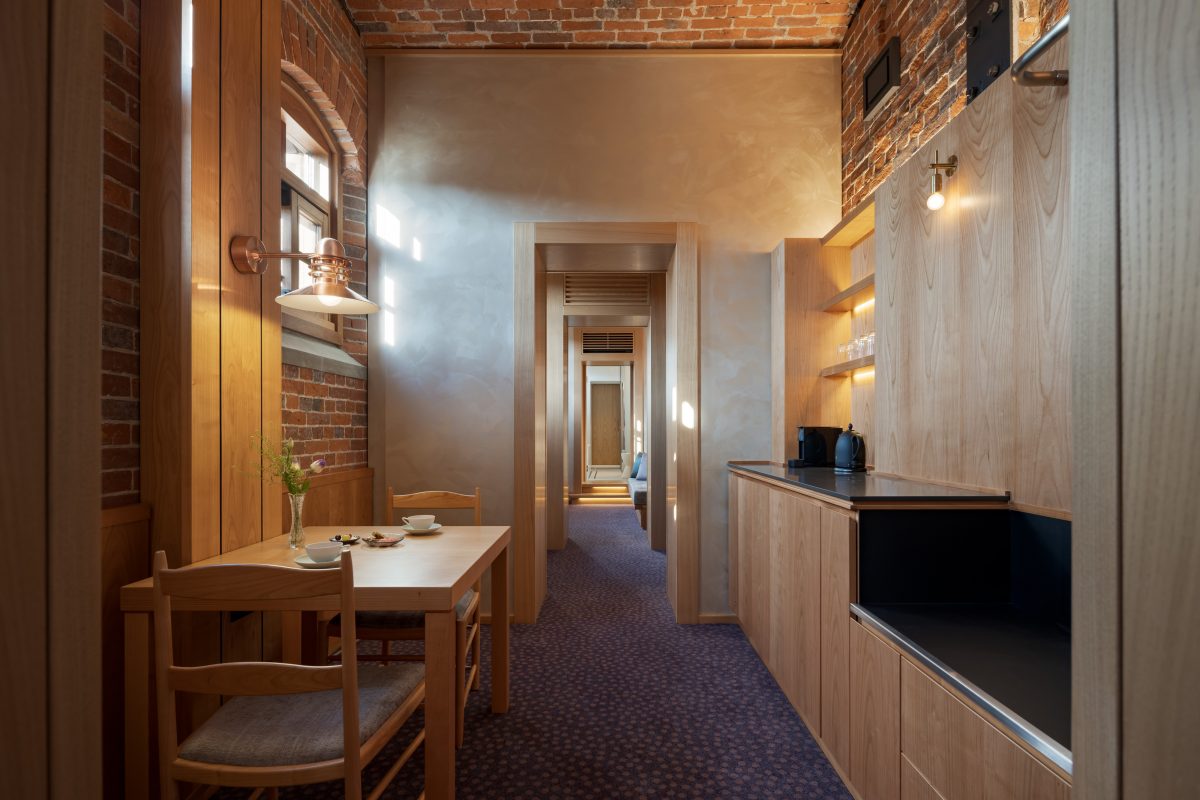
The hotel's public rooms follow the same negotiation. In the main lounge, arches and structural beams coexist with contemporary furniture, art and an invitation to linger. A courtyard that once belonged to an institution now provides another kind of enclosure. The building's scale remains, but its rituals have changed.
When confinement becomes a selling point
It would be easy to tell this story as a triumph of transformation: a place of confinement reborn as a sanctuary. The photographs almost invite that reading. Yet the words we use matter. For the people who lived within these walls before the conversion, escape was not a lifestyle choice.
Luxury hospitality has a habit of turning history into atmosphere. An old factory becomes an industrial-chic address; a convent becomes a place for contemplative weekends. These conversions can preserve extraordinary buildings, but they can also smooth away the realities that made those buildings what they were. A prison, more than most buildings, asks that the distinction be held in view.
HOSHINOYA's renovation is therefore worth considering not only through its suites but through what has been retained for the public. On the same grounds, the Nara Prison Museum opened in April 2026. Its preservation and exhibition areas introduce visitors to the building's architecture and institutional past, while asking broader questions about freedom and the structures that define it. The museum can be visited without booking a room at the hotel.
That separation is important. Heritage should not be accessible only to those who can afford to sleep inside it. The museum creates a second threshold: one concerned with public memory rather than private retreat. It does not automatically resolve the ethics of the conversion, but it makes a more responsible conversation possible.
The value of the unresolved
The best preservation projects are not necessarily those that make the past feel seamless. Sometimes the seams are the point. At Nara, the meeting of old brick and new timber is beautiful because the difference remains visible. The same principle might apply to the site's meaning. A new use need not demand a new, uncomplicated story.
There is another reason this project matters now. Across hospitality, originality is increasingly sold through unusual architecture: a room in a lighthouse, a converted train carriage, a suite in a former institution. The risk is that distinction becomes a visual commodity, separated from the people and histories that gave it meaning. Nara offers an opportunity to ask for more than a striking photograph.
Who is the story for? What has been conserved beyond the façade? What can a day visitor learn? Does the architecture allow an encounter with its past, or merely borrow that past to make the present feel more exclusive? These are questions rather than verdicts, and they deserve to remain open.
We have not stayed at HOSHINOYA Nara Prison. Our reading is based on the completed project and the documentation made public by its designers and operator. What is visible already is an ambitious effort to preserve a significant building while giving it an economically active second life. What can only be judged over time is how well that second life protects the complexity of the first.
A different definition of escape
Perhaps the most revealing aspect of the project is the proximity of two very different experiences. In one part of the grounds, a guest can withdraw into a quiet suite and enjoy the luxury of being unhurried. In another, a visitor can enter the museum and consider the history of a place where withdrawal was never a choice.
Neither experience should cancel the other. Together, they make the building more complicated, and potentially more valuable, than a beautiful hotel alone.
At SANTI, we are interested in places that change how we look, not only how we feel. Nara reminds us that atmosphere can be made from light, material and silence. Meaning requires something more: a willingness to leave the difficult parts of a story intact.
A new use need not demand a new, uncomplicated story.